
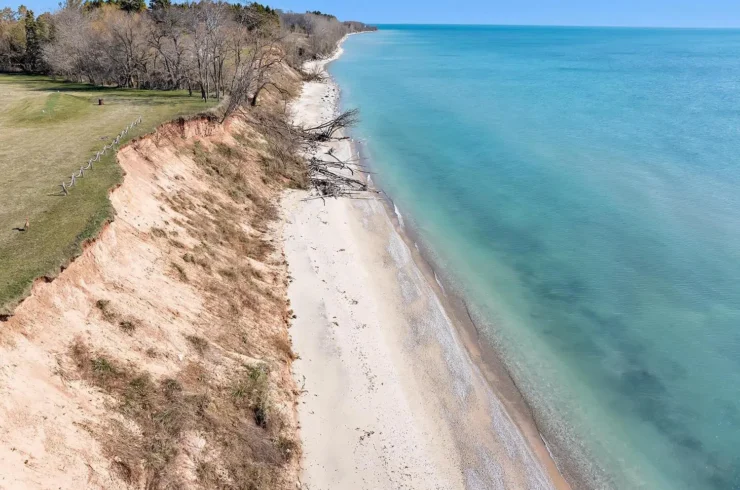
Ephraim Private Shoreline Access Rules: Your Waterfront Legal Guide
Owning waterfront property in Ephraim gives you an amazing sunset view, but it also comes with strict rules. Wisconsin protects its navigable waters through the Public Trust Doctrine. This means the state owns the water and the lakebed. This guide explains the core legal concepts and zoning rules that impact where you can build your house, your deck, and your dock.
You must know exactly where your private rights end and the public’s rights begin.
The Legal Foundation: Public Trust vs. Riparian Rights
Your rights as a waterfront owner (a riparian owner) exist in tension with the public’s right to use the water.
1. The Public Trust Doctrine
- The Rule: The water and the lakebed (up to the Ordinary High Water Mark) belong to the public. Anyone can use the water for swimming, boating, and walking, as long as they “keep their feet wet” below the legal boundary.
- Your Duty: You must not fence off navigable water or obstruct public use.
2. Your Riparian Rights
- The Privilege: You have the exclusive right to access the water from your land and to place a pier to reach navigable depths.
- The Boundary: The Ordinary High Water Mark (OHWM) is the key line. Land above the OHWM is your private domain. Land below it is public water.
Building Setbacks: The Critical 75-Foot Rule
The Village of Ephraim, like the rest of Door County, follows strict state minimum standards for construction near the water.
The 75-Foot Standard
- The Rule: All new primary structures (your house) must be set back at least 75 feet from the OHWM. This preserves water quality and natural beauty.
- The Exception (Setback Averaging): If your neighbors’ homes were built legally closer to the water before the rule changed (“grandfathered”), you may be allowed to build closer. Your setback is typically the average of the two adjacent properties, but never less than 35 feet.
- The Exemptions: Minor structures like walkways, stairways, and piers are exempt from the 75-foot rule because they are necessary for accessing the water.
Need help with your setback? [Request an “Appreciation History” Report] (We perform setback analysis as part of our consultation).
Piers, Docks, and Permits
Building a pier is a right, but it is heavily regulated.
- DNR Permit: Most new piers require an Individual Permit from the Wisconsin DNR (Department of Natural Resources). Minor repairs to existing piers may be exempt.
- Reasonable Use: The DNR limits the number of boat slips you can build based on your shoreline width to ensure “reasonable use.”
| Shoreline Owned (Feet) | Max Boat Slips Allowed (Non-Commercial) |
| 50 – 100 | Up to 2 Slips |
| 100 – 150 | Up to 3 Slips |
| 200+ | Up to 5 Slips (Requires justification) |
Trees and Views: The 35-Foot Buffer Rule
To protect the water quality of Eagle Harbor, you cannot clear all the trees on your shoreline.
- The Rule: You must maintain a 35-foot buffer strip of natural vegetation (trees, shrubs) from the OHWM.
- The Corridor: You are allowed to create an access/viewing corridor to the water, but this cleared area cannot exceed 30% of your total shoreline frontage (or 200 feet, whichever is less). This balances your desire for a sunset view with the environmental need for shoreline stabilization.
Final Thoughts
The Ephraim private shoreline access rules are complex, but they protect your investment. Knowing these laws upfront prevents costly construction delays and legal issues. Your dream dock requires a permit strategy.
Request a “Permit Feasibility” Check
Don’t buy a waterfront property without knowing if you can build the dock you want.
Request our Private Shoreline Audit: “Ephraim Permit Feasibility Pre-Check.”
We will:
- Estimate the OHWM setback for any property you send us, based on adjacent structures.
- Review your pier plans for DNR “reasonable use” compliance.
- Connect you directly with the Ephraim Zoning Administrator to start the process.
Know your rights. Know your limits. Contact us today for your audit.
Connect with Our Expertise
Use these guides to complete your waterfront strategy.
- Waterfront Value: Sunset Views vs Sunrise Views Door County Property Value
- Dock Access: Yacht Owner’s Guide: Where to Find Deep Water Access Homes in Sturgeon Bay
- Investment Returns: The Definitive Guide to Door County Waterfront Real Estate